AI search local lead generation 2026 centers on capturing visibility within zero-click AI overviews that provide immediate answers to local consumer queries. Businesses must shift their strategy toward Generative Engine Optimization and high-authority citations to ensure their services are featured in personalized AI recommendations. This approach addresses the decline in traditional search traffic by positioning brands as the primary solution directly within AI-generated summaries.
By 2026, the traditional lead generation funnel has developed a catastrophic leak that most local businesses still fail to recognize. You might notice your organic rankings remain high while your phone stops ringing; this is a direct result of the zero click reality where AI agents answer queries before a user ever reaches your website. This shift signifies more than a minor algorithm update; it is a total restructuring of how local service providers capture market share. In this guide, we will explore why standard SEO creates an invisibility gap and how you can transition to Generative Engine Optimization. You will learn to leverage hyperlocal data within a five block radius and optimize for AI overviews to ensure your business remains the primary recommendation in a landscape dominated by predictive search engines and multilingual AI models.
The Zero Click Reality: Why Your Traditional Lead Funnel Is Leaking

The landscape of local customer acquisition is shifting fundamentally. For years, Dallas business owners relied on a simple formula: rank high, generate clicks, and convert those visitors into customers. That formula is currently failing. We are witnessing the Silent Lead Drain, a phenomenon where traditional funnels appear functional in your analytics, but the actual conversion of high-intent traffic into inquiries is evaporating.
Recent data confirms that nearly 65 percent of Google searches now end without a single click. In previous years, a user searching for an HVAC repair service in Highland Park or a medical specialist in North Dallas would click through several websites to compare options. Today, Google’s AI Overviews provide the answers, pricing ranges, and service availability directly on the search engine results page (SERP). This satisfies the user's intent immediately, preventing them from ever reaching a provider's website.
This shift is not a temporary trend. Gartner predicts that traditional search volume will drop by 25 percent by the end of 2026. For businesses relying on performance-driven lead generation services, the urgency is clear. You may see traffic numbers stay relatively flat, but lead quality is declining because the highest-intent users are getting their answers from the AI summary rather than your landing page.
Adapting to AI search local lead generation 2026 requires moving beyond the 2022 playbook. Generic SEO is no longer sufficient when the search engine itself acts as the gatekeeper of information. To recapture this lost visibility, businesses must implement hyper-targeted local marketing strategies that feed these AI models the specific data they require. If your current funnel is leaking, you can contact BC Marketing for a risk-free trial to audit your AI search visibility.
The 88 Percent Invisibility Gap: Why Standard SEO Fails in AI Search

The erosion of the traditional funnel is merely a symptom of a much larger structural problem in digital discovery. Even if your business currently ranks in the top three of the Google Map Pack, you are likely facing an 88.1 percent invisibility gap. This figure represents the staggering number of local businesses that are completely absent from AI search discovery. While traditional search engines provide a list of options for the user to sort through, AI assistants like Gemini and Perplexity act as curators. They typically recommend only a tiny fraction of available service providers, often citing only 1 to 11 percent of the locations found in a standard map result.
The reason standard SEO fails in this environment is the transition from simple keyword matching to entity authority. For years, local businesses optimized for specific phrases like Dallas cosmetic dentistry or law firm near Uptown. In the era of AI search local lead generation 2026, these models do not just look for strings of text. They analyze your business as an entity, a distinct object with a verified relationship to a location, a service, and a reputation. AI models look for consistent, high-intent signals across the entire web ecosystem, including third-party databases, structured data feeds, and localized citations.
A fast-loading website is now just a baseline requirement, not a competitive advantage. AI engines prioritize businesses that demonstrate deep authority through hyper-targeted local marketing strategies that prove relevance within a specific geographic context. If your digital footprint is fragmented or if your data is inconsistent across platforms, AI models will simply skip over you in favor of a safer recommendation. This gatekeeping behavior means that visibility is no longer a democratic ranking; it is an exclusive selection. To remain viable, Dallas businesses must stop optimizing for bots and start building the entity authority that AI agents trust.
From SEO to GEO: Mastering Generative Engine Optimization
To bridge the invisibility gap, Dallas firms must transition from traditional Search Engine Optimization (SEO) to Generative Engine Optimization (GEO). While SEO focused on ranking a page, GEO focuses on making your business the primary source for the AI’s synthesized response. This requires a shift from targeting isolated keywords to building deep, interconnected data layers that AI models can ingest and relay with confidence.
Optimizing for AI Overviews begins with advanced structured data. Implementing schema markup that defines not just your address, but the specific relationships between your practitioners, their credentials, and the neighborhoods they serve, is essential. For a medical practice in Turtle Creek or an HVAC company servicing Plano, this means nesting local business schema within broader service entities to ensure the AI understands the who and the where simultaneously.
Content strategy must also evolve to answer conversational how and why queries. AI models prioritize content that explains the mechanics of a service, such as how a specific Dallas foundation repair method addresses local clay soil issues. By structuring your landing pages to answer these long tail, high intent questions, you align with the logic used in AI search local lead generation 2026. This technical precision is what allows BC Marketing to deliver performance-driven lead generation services that go beyond simple traffic. Unlike generic strategies that cast a wide, shallow net, mastering GEO requires hyper-targeted local marketing strategies that provide the specific, authoritative answers generative engines use to build their recommendations.
The Hyperlocal Advantage: Using Five Block Radius Data to Feed AI Models
Generative engines operate on the principles of proximity and data density. When an AI model synthesizes a recommendation for a user in the M Streets or Preston Hollow, it scans for the highest concentration of localized authority rather than broad, city-wide mentions. Generic marketing aimed at the entire Dallas Metroplex is increasingly ignored by these systems because it lacks the neighborhood-level proof required for a top-tier recommendation.
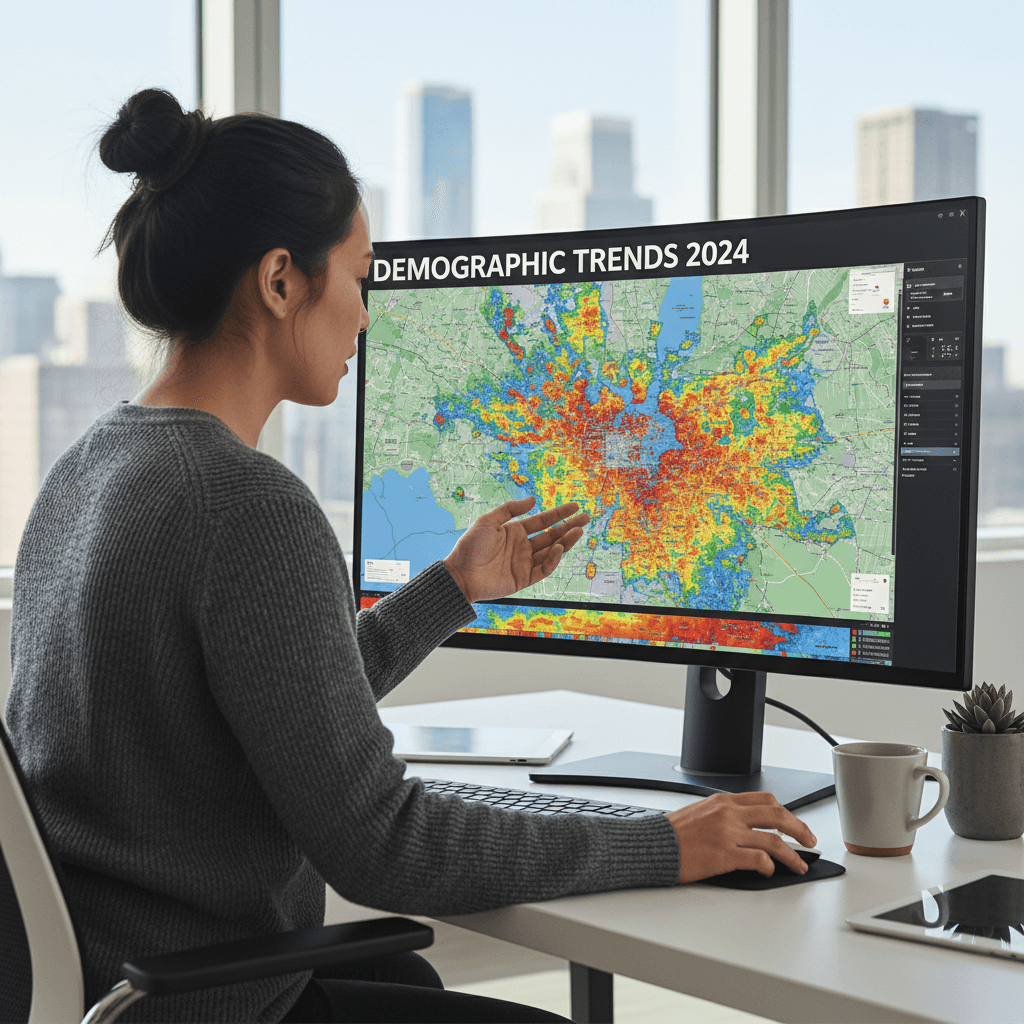
Our strategy focuses on building data clusters within a five-block demographic radius. This hyper-specificity feeds AI engines the exact granular signals they need to verify your business as the most relevant entity for a specific micro-market. This level of precision is critical for AI search local lead generation 2026. When you dominate a five-block radius, you are not just improving visibility; you are directly optimizing your Net Operating Income. By capturing high-intent leads that are geographically closest to your physical operations, you significantly reduce travel times for service technicians, minimize fuel costs, and lower overall customer acquisition expenses.
This density of data creates a localized feedback loop. AI models recognize the high engagement and service frequency within a tight radius, rewarding that business entity with higher visibility in localized summaries. Implementing these hyper-targeted local marketing strategies ensures that your business remains the primary recommendation for the users most likely to convert. For service businesses looking to scale efficiently, moving away from broad-stroke advertising toward these high-density clusters is the only way to maintain performance-driven lead generation services in a curated search environment. To see how your current footprint compares to your local competitors, you can contact BC Marketing for a risk-free trial of our hyperlocal mapping tools.
Multilingual AI Visibility: The Untapped Lead Source for 2026
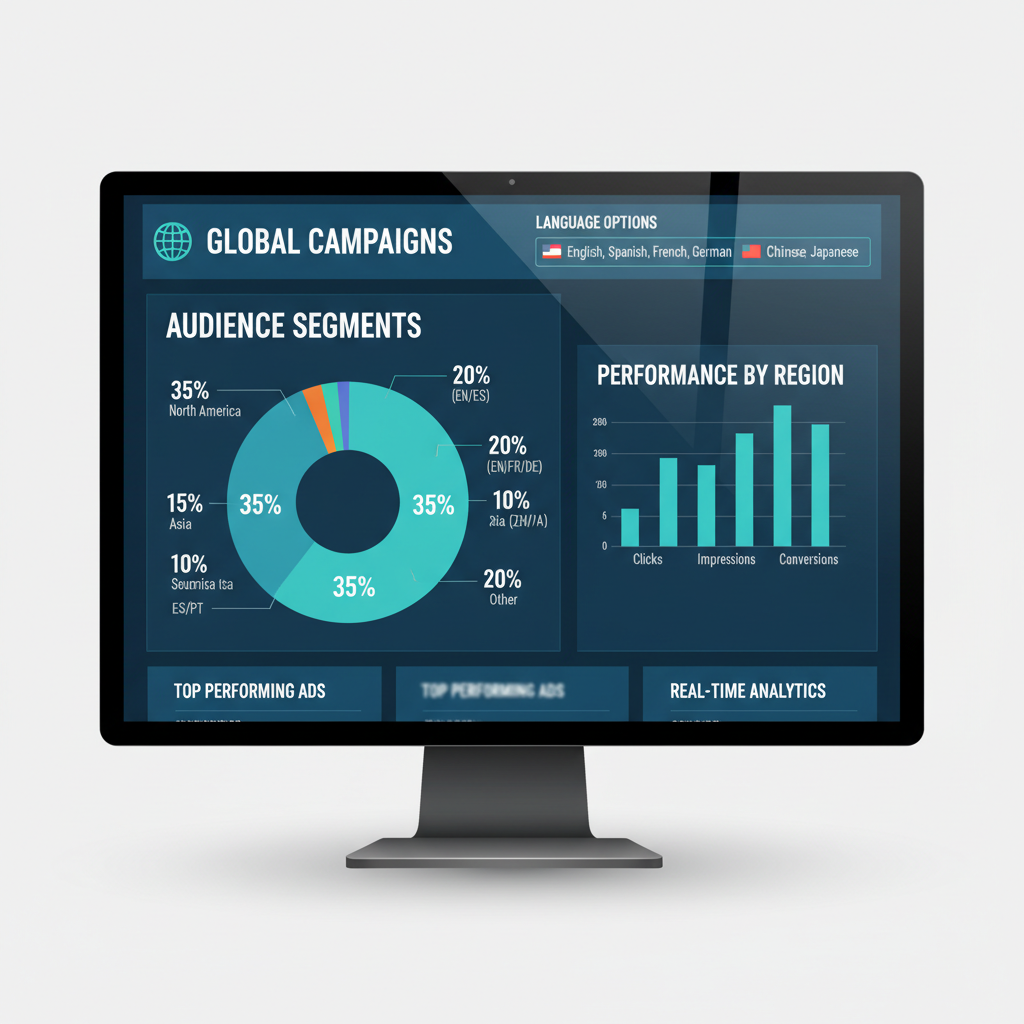
The focus on geographic density naturally leads to a demographic reality many Dallas firms overlook: linguistic diversity. AI search local lead generation 2026 is inherently multilingual because generative models do not simply translate keywords; they process intent across language barriers simultaneously. While most local competitors are fixated on English only optimization, a significant portion of high intent search volume in North Texas occurs in Spanish and other regional languages.
By providing AI models with multilingual data feeds, you capture a hidden market segment that remains largely untapped. When a homeowner in Oak Cliff or a business owner in Irving queries an AI assistant in Spanish, the engine searches for entities that provide verified, localized information in that specific language. If your structured data and entity signals are only available in English, you are effectively invisible to nearly 40 percent of the Dallas population.
Integrating these hyper-targeted local marketing strategies into your outreach allows you to cast a much wider net for performance-driven lead generation services. At BC Marketing, we specialize in multi-language localized campaigns that feed AI models the specific data they need to recommend your business to every demographic in your target radius. To see how a multilingual approach can expand your reach, contact BC Marketing for a risk-free trial and audit your current linguistic visibility.
How to Get Your Business Featured in AI Overviews in 2026
Securing a spot in an AI Overview requires a shift from passive listing management to active entity validation. To capture high-intent leads in this new environment, your digital infrastructure must provide unambiguous signals that generative engines can trust and relay. Currently, only 14 percent of businesses are tracking their AI visibility; this represents a significant opportunity for Dallas service providers to dominate their local market before the rest of the industry adapts.
Follow this implementation checklist to optimize for AI search local lead generation 2026:
Deploy Advanced Schema Markup: Go beyond basic NAP (Name, Address, Phone) data. Use JSON-LD to define specific service areas, professional certifications, and parent-child relationships between business locations. This structured data acts as a direct feed for AI models to understand your business's specific capabilities.
Diversify High-Authority Citations: AI engines look for consensus across the web. While Yelp and Google Business Profile remain important, you must secure mentions on industry-specific directories and local Dallas publications. This broad validation builds the entity authority required for AI recommendations.
Optimize for Conversational 'Near Me' Queries: Structure your content to answer the specific, spoken questions users ask their AI assistants. Use natural language that reflects how a homeowner in Plano or a business owner in Uptown actually speaks when looking for immediate solutions.
Enforce a 95 Percent Review Response Rate: AI models weigh sentiment and responsiveness as proxies for reliability. Failing to respond to reviews signals a lack of engagement, which can disqualify you from AI-curated summaries.
Businesses that prioritize these hyper-targeted local marketing strategies will see a direct impact on their visibility. By focusing on these technical and reputational benchmarks, you can transition your performance-driven lead generation services into the generative era. To audit your current readiness and secure your position in local search, contact BC Marketing for a risk-free trial.